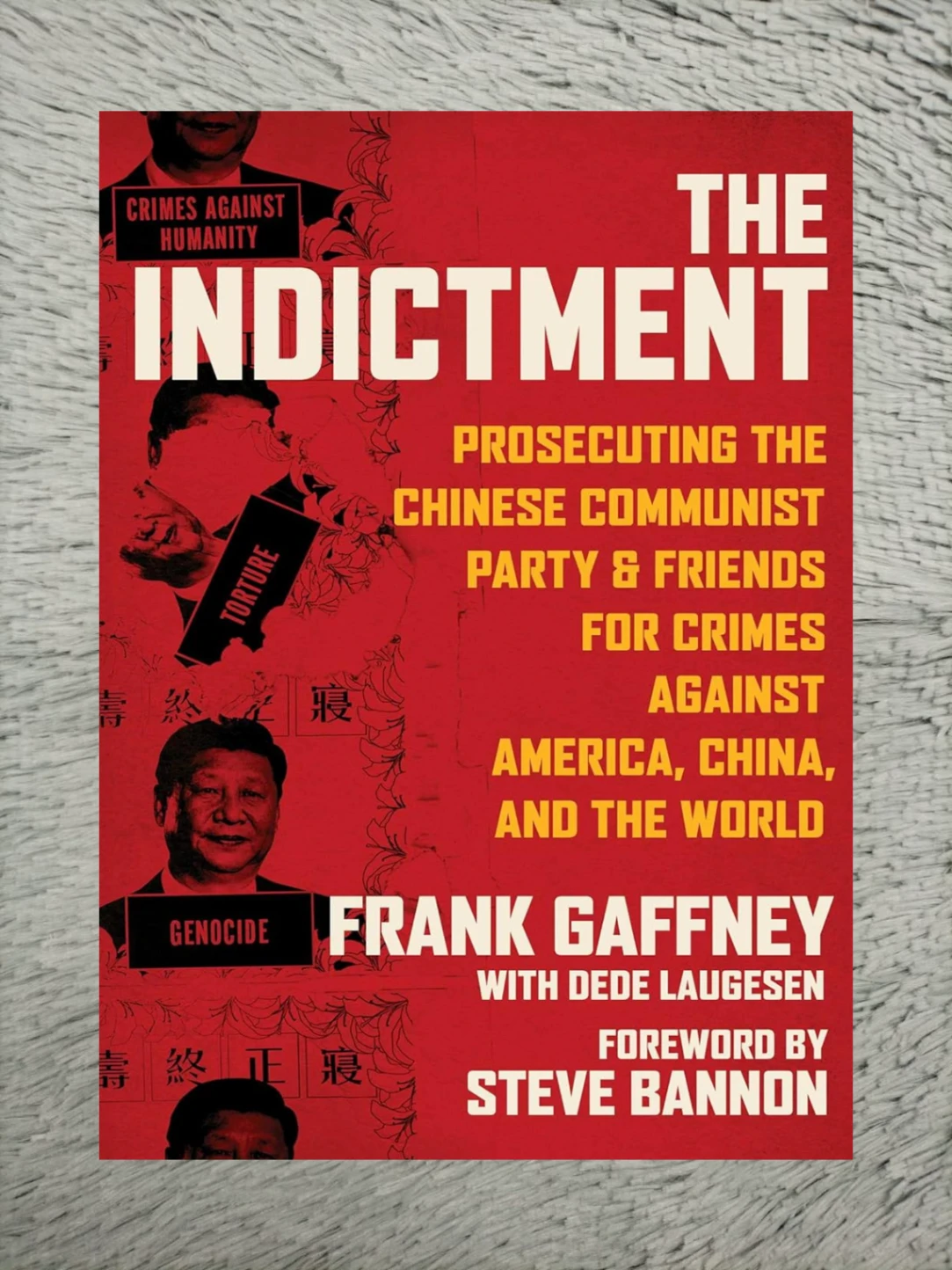
by Frank Gaffney & Dede Laugesen (Author's)
The Indictment: Prosecuting the Chinese Communist Party & Friends for Crimes against America, China, and the World by Frank Gaffney and Dede Laugesen is a forceful and highly controversial political critique that argues the Chinese Communist Party (CCP) poses an existential threat to the United States, global freedom, and basic human rights. The book draws on decades of strategic analysis and a series of research webinars conducted by the Committee on the Present Danger: China to build its case. The authors frame the CCP not merely as a geopolitical rival but as an adversary engaging in what they describe as “Unrestricted Warfare”—a broad campaign of economic, technological, political, and strategic actions aimed at undermining U.S. national interests and promoting Beijing’s global dominance. This argument is rooted in a worldview that sees the CCP’s long‑term strategy as hostile to democratic norms and Western security. Central to the book is the claim that the CCP and its American enablers should be held accountable for a series of alleged “crimes” against America, Chinese citizens, and others around the world. To this end, the authors outline nine specific charges they argue could be brought against the CCP—including accusations related to espionage, intellectual property theft, economic coercion, and influence operations—and call for public, legal, and political action based on these charges. The book also identifies twenty concrete actions that it advocates for countering what the authors see as CCP aggression. These range from strengthening U.S. legislative and regulatory responses to reducing economic dependencies, exposing perceived infiltration in institutions, and pressuring allies to adopt tougher stances. The overall aim is to galvanize policymakers, journalists, and the broader public to confront the threat the authors associate with the CCP and its global network of influence. Stylistically, the book combines strategic analysis with advocacy. It is not written as a neutral historical survey but rather as a call to action: urging readers to view U.S.–China competition as a zero‑sum struggle and to adopt what the authors describe as a Reagan‑style posture of robust resistance. While the approach is clear and direct, it reflects a highly partisan perspective, and many mainstream academic observers do not share the same framing or conclusions.
Format